
Safety was consistent with the established profile of CALQUENCE*1,2
Most ARs were Grade 1 or 2 in the CALQUENCE + BR arm
Most common ARs (≥15% All Grades)
PINCH TO ZOOM
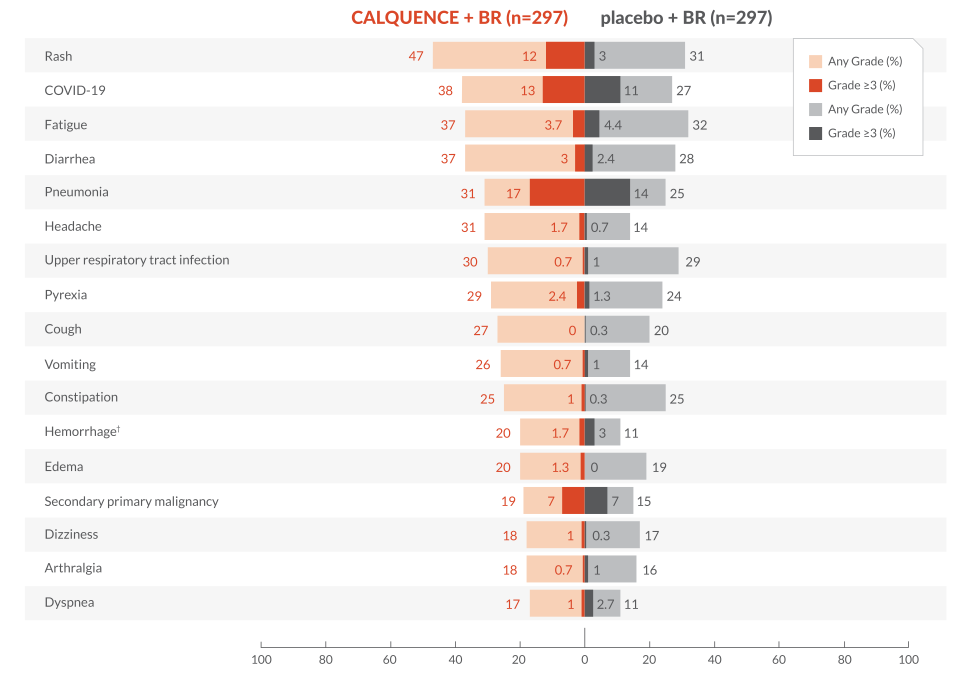
Values >5 are rounded to the nearest whole number.
- Serious adverse reactions occurred in 69% of patients who received CALQUENCE plus BR. Serious ARs reported in ≥2% of patients were pneumonia (23%; includes COVID-19 pneumonia), COVID-19 (20%; includes COVID-19 pneumonia), second primary malignancy (7%), pyrexia (6%), rash (3.4%), febrile neutropenia (3.4%), atrial fibrillation (3%), sepsis (2.7%), and anemia (2.4%).
- Fatal adverse reactions that occurred within 30 days of the last study treatment were reported in 12% who received CALQUENCE plus BR, including COVID-19 (6%; includes COVID-19 pneumonia), pneumonia (1%), sepsis (0.3%), second primary malignancy (0.7%), and pneumonitis (0.3%)1
- Clinically relevant adverse reactions in <15% of patients receiving CALQUENCE + BR included bruising, abdominal pain, atrial fibrillation or flutter, and tumor lysis syndrome1
- The median duration of exposure was 28.6 months with CALQUENCE + BR and 24.6 months with placebo + BR1,2
- A total of 171 (57.6%) patients were treated with CALQUENCE for >24 months and 122 (41.1%) patients were treated for >36 months1
- ARs leading to discontinuation of CALQUENCE or placebo were 43% (n=127) and 31% (n=92), respectively. ARs which resulted in discontinuation of CALQUENCE in ≥4% of patients included COVID-19 (includes COVID-19 pneumonia) and neutropenia1,2
- ARs leading to dosage interruptions of CALQUENCE or placebo were 74% (n=219) and 60% (n=179), respectively; the dosage reductions of CALQUENCE or placebo were 10% (n=30) and 8% (n=25), respectively1,2
*Except COVID-19. †Hemorrhage includes all terms containing hematoma, hemorrhage, and related terms indicative of bleeding.1
Low rates of cardiovascular adverse events2
Rates of atrial fibrillation, hypertension, and major bleeding were low with CALQUENCE + BR
Events of clinical interest
| Event | CALQUENCE + BR (n=297) |
placebo + BR (n=297) |
||
|---|---|---|---|---|
| Any Grade (%) | Grade ≥3 (%) | Any Grade (%) | Grade ≥3 (%) | |
| Atrial fibrillation | 7 | 4 | 4.4 | 1.7 |
| Hypertension | 12 | 6 | 16 | 8 |
| Major bleeding* | 2.4 | 2 | 5 | 3.4 |
| Infections | 78 | 41 | 71 | 34 |
| Second primary malignancies (excluding nonmelanoma skin malignancy) | 10 | 5 | 11 | 7 |
Values >5 are rounded to the nearest whole number.
In a pooled analysis of 2055 patients exposed to CALQUENCE, Grade ≥3 infections occurred in 29%, with neutropenic infection in 8%; major hemorrhage occurred in 4.7%, with fatal hemorrhage in 0.1%; fatal second primary malignancies occurred in 0.8%; Grade 3/4 atrial fibrillation or flutter in 2.2% and Grade ≥3 ventricular arrhythmia in 0.5%, including fatal cases in 0.3%. Among 1758 patients, Grade 3/4 cytopenias included absolute neutrophil count decreased (28%), absolute lymphocyte count decreased (10%), hemoglobin decreased (9%), and platelets decreased (9%), with Grade 4 neutropenia in 14%.1
*Defined as a hemorrhagic event that is serious, or Grade ≥3 in severity, or that is a CNS hemorrhage (any severity Grade).2
AEs=adverse events; CNS=central nervous system.
- 1. CALQUENCE® (acalabrutinib) tablets [prescribing information]. Wilmington, DE: AstraZeneca Pharmaceuticals LP; 2026.
- 2. Wang M, Salek D, Belada D, et al. Acalabrutinib plus bendamustine-rituximab in untreated mantle cell lymphoma. J Clin Oncol. 2025;43(20):2276-2284.
IMPORTANT SAFETY INFORMATION ABOUT CALQUENCE® (acalabrutinib) tablets
Serious and Opportunistic Infections
Fatal and serious infections, including opportunistic infections, have occurred in patients with hematologic malignancies treated with CALQUENCE.
Serious or Grade 3 or higher infections (bacterial, viral, or fungal) occurred in 29% of 2,055 patients exposed to CALQUENCE in clinical trials, most often due to respiratory tract infections (18% of all patients, including pneumonia in 14%). These infections predominantly occurred in the absence of Grade 3 or 4 neutropenia, with neutropenic infection reported in 8% of all patients. Opportunistic infections in recipients of CALQUENCE have included, but are not limited to, hepatitis B virus reactivation, fungal pneumonia, Pneumocystis jirovecii pneumonia, Epstein-Barr virus reactivation, cytomegalovirus, and progressive multifocal leukoencephalopathy (PML). Consider prophylaxis in patients who are at increased risk for opportunistic infections. Monitor patients for signs and symptoms of infection and treat promptly.
Hemorrhage
Fatal and serious hemorrhagic events have occurred in patients treated with CALQUENCE. Major hemorrhage (serious or Grade 3 or higher bleeding or any central nervous system bleeding) occurred in 4.7% of patients, with fatal hemorrhage occurring in 0.1% of 2,055 patients exposed to CALQUENCE in clinical trials. Bleeding events of any grade, excluding bruising and petechiae, occurred in 39% of patients.
Use of antithrombotic agents concomitantly with CALQUENCE may further increase the risk of hemorrhage. In clinical trials, major hemorrhage occurred in 5% of patients taking CALQUENCE without antithrombotic agents and 3.2% of patients taking CALQUENCE with antithrombotic agents. Consider the risks and benefits of antithrombotic agents when co-administered with CALQUENCE. Monitor patients for signs of bleeding.
Consider the benefit-risk of withholding CALQUENCE for 3 to 7 days pre- and post-surgery depending upon the type of surgery and the risk of bleeding.
Cytopenias
CALQUENCE can cause Grade 3 or 4 cytopenias. Grade 3 or 4 cytopenias included absolute neutrophil count decreased (28%), absolute lymphocyte count decreased (10%), hemoglobin decreased (9%), and platelets decreased (9%) in 1,758 patients treated with CALQUENCE alone and in combination with obinutuzumab or venetoclax; Grade 4 neutropenia developed in 14% of patients.
Monitor complete blood counts regularly during treatment. Interrupt treatment, reduce the dose, or discontinue treatment as warranted.
Second Primary Malignancies
Second primary malignancies, including skin cancers and other solid tumors, occurred in 16% of 2,055 patients exposed to CALQUENCE in clinical trials. The most frequent second primary malignancy was non-melanoma skin cancer, reported in 9% of patients, followed by other solid tumors in 8% (including melanoma, lung cancer, gastrointestinal cancers, and genitourinary cancers) and hematologic malignancies (1.1%). Fatal second primary malignancies occurred in 0.8% of patients. Monitor patients for the development of second cancers and advise protection from sun exposure.
Cardiac Arrhythmias
Fatal and serious cardiac arrhythmias have occurred in patients treated with CALQUENCE. Grade 3 or 4 atrial fibrillation or flutter was reported in 2.2% of 2,055 patients treated with CALQUENCE, with all grades of atrial fibrillation or flutter reported in 7% of all patients. Grade 3 or higher ventricular arrhythmia events were reported in 0.5% of patients, including fatal cases in 0.3% of all patients. The risk of arrhythmias may be increased in patients with cardiac risk factors, hypertension, previous arrhythmias, and acute infection. Monitor for symptoms of arrhythmia (eg, palpitations, dizziness, syncope, dyspnea) and manage as appropriate.
Hepatotoxicity, Including Drug-Induced Liver Injury
Hepatotoxicity, including severe, life-threatening, and potentially fatal cases of drug-induced liver injury (DILI), has occurred in patients treated with Bruton tyrosine kinase inhibitors, including CALQUENCE.
Evaluate bilirubin and transaminases at baseline and throughout treatment with CALQUENCE. For patients who develop abnormal liver tests after CALQUENCE, monitor more frequently for liver test abnormalities and clinical signs and symptoms of hepatic toxicity. If DILI is suspected, withhold CALQUENCE. Upon confirmation of DILI, discontinue CALQUENCE.
ADVERSE REACTIONS
Chronic Lymphocytic Leukemia
The most common adverse reactions (≥30%) of any grade in patients with CLL in the ELEVATE-TN and ASCEND studies exposed to CALQUENCE (n=511) were anemia,* neutropenia,* thrombocytopenia,* headache, upper respiratory tract infection, and diarrhea.
*Treatment-emergent decreases (all grades) of hemoglobin, platelets, and neutrophils were based on laboratory measurements and adverse reactions.
In patients with previously untreated CLL in the ELEVATE-TN study exposed to CALQUENCE (n=357), fatal adverse reactions that occurred in the absence of disease progression and with onset within 30 days of the last study treatment were reported in 2% for each treatment arm, most often from infection. Serious adverse reactions were reported in 39% (69/178) of patients in the CALQUENCE plus obinutuzumab arm (n=178) and 32% (57/179) in the CALQUENCE monotherapy arm (n=179), most often due to events of pneumonia (2.8% to 7%).
Adverse reactions led to CALQUENCE dose reduction in 7% and 4% of patients in the CALQUENCE plus obinutuzumab arm and CALQUENCE monotherapy arm, respectively. Adverse reactions led to discontinuation in 11% and 10% of patients, respectively. Increases in creatinine to 1.5 to 3 times ULN occurred in 3.9% and 2.8% of patients in the CALQUENCE combination arm and monotherapy arm, respectively.
In patients with relapsed/refractory CLL in the ASCEND study exposed to CALQUENCE (n=154), serious adverse reactions occurred in 29% of patients. Serious adverse reactions in >5% of patients who received CALQUENCE included lower respiratory tract infection (6%). Fatal adverse reactions within 30 days of the last dose of CALQUENCE occurred in 2.6% of patients, including from second primary malignancies and infection.
Adverse reactions led to CALQUENCE dose reduction in 3.9% of patients, dose interruptions in 34% of patients, most often due to respiratory tract infections followed by neutropenia, and discontinuation in 10% of patients, most frequently due to second primary malignancies followed by infection. Increases in creatinine to 1.5 to 3 times ULN occurred in 1.3% of patients who received CALQUENCE.
In patients with previously untreated CLL in the AMPLIFY study who received CALQUENCE plus venetoclax (AV) (n=291), the most common adverse reactions (≥15%) of any grade were headache (35%), diarrhea (33%), musculoskeletal pain (25%), COVID-19 (21%), fatigue (18%), bruising (17%), rash (16%), and nausea (15%).
The most common laboratory abnormalities (≥15%) of any grade in patients with previously untreated CLL who received AV were neutrophils decreased (78%), glucose increased (74%), lymphocytes decreased (56%), platelets decreased (43%), hemoglobin decreased (35%), calcium decreased (30%), ALT increased (26%), urate increased (25%), LDH increased (24%), potassium increased (22%), AST increased (22%), ALP increased (20%), glucose decreased (20%), creatinine increased (19%), and sodium increased (15%). Grade 4 laboratory abnormalities in >15% of patients treated with AV include absolute neutrophil count decreased (15%).
Serious adverse reactions occurred in 25% of patients receiving AV. The most common serious adverse reactions (≥2%) were COVID-19 including COVID-19 pneumonia (9%), second primary malignancies (2.7%), and neutropenia (2.1%). Fatal adverse events occurred in 3.4% of patients. The most common fatal adverse events included COVID-19 and COVID-19 pneumonia.
Treatment discontinuation of CALQUENCE due to adverse reactions occurred in 8% of patients receiving AV. The most common adverse reaction (≥2%) leading to treatment discontinuation was COVID-19 pneumonia (2.1%). Dose reduction of CALQUENCE occurred in 6% of patients. Neutropenia was the only adverse reaction leading to dose reduction that occurred in ≥1% of patients.
Previously Untreated Mantle Cell Lymphoma
The most common adverse reactions (≥15%) of any grade in patients with previously untreated MCL in the ECHO study who received CALQUENCE plus BR (n=297) were rash (47%), COVID-19 (38%), fatigue (37%), diarrhea (37%), pneumonia (31%), headache (31%), upper respiratory tract infection (30%), pyrexia (29%), cough (27%), vomiting (26%), constipation (25%), hemorrhage (20%), edema (20%), secondary primary malignancy (19%), dizziness (18%), arthralgia (18%), and dyspnea (17%).
Grade 4 laboratory abnormalities in >15% of patients treated with CALQUENCE plus BR include absolute lymphocyte count decreased (26%), absolute neutrophil count decreased (36%), and uric acid increased (17%).
Serious adverse reactions occurred in 69% of patients who received CALQUENCE plus BR. Serious adverse reactions reported in ≥2% of patients were pneumonia (23%; includes COVID-19 pneumonia), COVID-19 (20%; includes COVID-19 pneumonia), second primary malignancy (7%), pyrexia (6%), rash (3.4%), febrile neutropenia (3.4%), atrial fibrillation (3%), sepsis (2.7%), and anemia (2.4%). Fatal adverse reactions that occurred within 30 days of the last study treatment were reported in 12% who received CALQUENCE plus BR including COVID-19 (6%; includes COVID-19 pneumonia), pneumonia (1%), second primary malignancy (0.7%), sepsis (0.3%), and pneumonitis (0.3%).
Adverse reactions led to permanent discontinuation of CALQUENCE in 43%, dosage interruptions in 74%, and dosage reductions in 10% of patients. Adverse reactions that resulted in dosage modification in >10% included infections, cytopenias, rashes, and gastrointestinal toxicity. Adverse reactions which resulted in permanent discontinuation of CALQUENCE in ≥4% of patients included COVID-19 (includes COVID-19 pneumonia) and neutropenia.
Previously Treated Mantle Cell Lymphoma
The most common adverse reactions (≥20%) of any grade in patients with relapsed or refractory MCL in the LY-004 study exposed to CALQUENCE (n=124) were anemia,* thrombocytopenia,* headache (39%), neutropenia,* diarrhea (31%), fatigue (28%), myalgia (21%), and bruising (21%). The most common Grade ≥3 non-hematological adverse reaction (reported in at least 2% of patients) was diarrhea (3.2%).
*Treatment-emergent decreases (all grades) of hemoglobin (46%), platelets (44%), and neutrophils (36%) were based on laboratory measurements and adverse reactions.
Dose reductions or discontinuations due to any adverse reaction were reported in 1.6% and 6.5% of patients, respectively. Increases in creatinine to 1.5 to 3 times the upper limit of normal (ULN) occurred in 4.8% of patients.
DRUG INTERACTIONS
Strong CYP3A Inhibitors: Avoid co-administration of CALQUENCE with a strong CYP3A inhibitor. If these inhibitors will be used short-term, interrupt CALQUENCE. After discontinuation of strong CYP3A inhibitor for at least 24 hours, resume previous dosage of CALQUENCE.
Moderate CYP3A Inhibitors: Reduce the dosage of CALQUENCE to 100 mg once daily when co-administered with a moderate CYP3A inhibitor.
Strong CYP3A Inducers: Avoid co-administration of CALQUENCE with a strong CYP3A inducer. If co‑administration is unavoidable, increase the dosage of CALQUENCE to 200 mg approximately every 12 hours.
SPECIFIC POPULATIONS
Based on findings in animals, CALQUENCE may cause fetal harm and dystocia when administered to a pregnant woman. There are no available data in pregnant women to inform the drug-associated risk. Advise pregnant women of the potential risk to a fetus.
Pregnancy testing is recommended for females of reproductive potential prior to initiating CALQUENCE therapy. Advise female patients of reproductive potential to use effective contraception during treatment with CALQUENCE and for 1 week following the last dose of CALQUENCE.
It is not known if CALQUENCE is present in human milk. Advise lactating women not to breastfeed while taking CALQUENCE and for 2 weeks after the last dose.
Of patients that received AV in AMPLIFY, 33% (97/291) were ≥65 years, and 4.5% (13/291) were ≥75 years of age. In patients ≥65 years and <65 years of age, the fatal adverse reactions were 5% and 2.6%, respectively.
Avoid use of CALQUENCE in patients with severe hepatic impairment (Child-Pugh class C). No dosage adjustment of CALQUENCE is recommended in patients with mild (Child-Pugh class A) or moderate (Child-Pugh class B) hepatic impairment.
INDICATIONS AND USAGE
CALQUENCE is a Bruton tyrosine kinase (BTK) inhibitor indicated:
- For the treatment of adult patients with chronic lymphocytic leukemia (CLL) or small lymphocytic lymphoma (SLL).
- In combination with bendamustine and rituximab (BR) for the treatment of adult patients with previously untreated mantle cell lymphoma (MCL) who are ineligible for autologous hematopoietic stem cell transplantation (HSCT).
- For the treatment of adult patients with MCL who have received at least one prior therapy.
Please see full Prescribing Information, including Patient Information.